


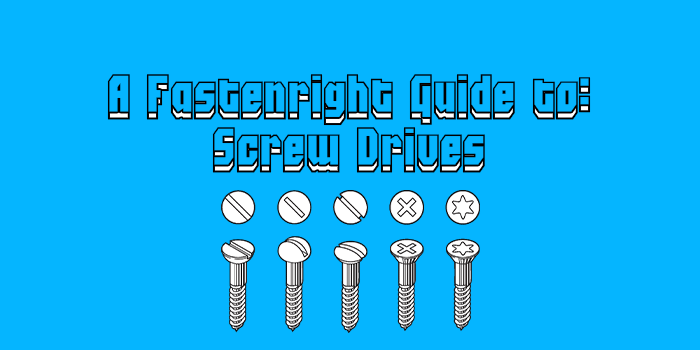
In this guide to screw head types and screw drive types, we’ll examine the differences and why choosing the right combination matters for the success of your project.
As a starting point, knowing the difference between the screw head and screw drive is paramount. The two are often confused but actually refer to different parts of the screw.
The screw head is the external shape of the top portion of the screw.
The screw drive is the recess positioned within the screw head where the installation tool (screwdriver or similar) fits.
The combination of screw head and screw drive types will have a bearing on torque performance, ease of installation, security, access and appearance, and in many engineering and industrial applications, different screw types need to be used to meet performance, safety or industry standards.
Parts of a Screw Explained
Below is an overview of the terminology relating to different parts of a screw:
- Head – the non-penetrating end of the screw, containing the drive
- Drive – the recess shape in which the driving tool fits
- Shank – the smooth portion between the head and the thread
- Thread – the grooved spiral that creates the fastening force
- Point – the tip which is driven into the material
What Is a Screw Head?
As the external shape of the top portion of the screw, the screw head is designed to accommodate the drive where applicable, allowing a tool to engage and turn the screw into a material. It is designed to provide a bearing surface to distribute the load, and can be shaped in various ways depending on requirements.
The design of the head will affect the finish, whether countersunk or protruding, as well as the accessibility and security of the installation. Different screw head types are suited to different environments and load applications, so it is worth checking with the experts at Fastenright if you need help selecting the right screw head for the job.
Common Screw Head Types
| Screw Head Type | Advantages | Disadvantages | Typical Application |
| Countersunk (Flat) Head | Flush finish | Reduced bearing area | Panels, furniture, sheet metal |
| Pan Head | Good bearing surface | Protrudes above surface | Electronics, general assembly |
| Button (Dome) Head | Smooth appearance | Lower drive depth | Decorative and consumer products |
| Truss Head | Wide load distribution | Larger head diameter | Thin sheet materials |
| Flange Head | Integral washer effect | Requires more clearance | Industrial equipment |
| Socket Cap Head | High strength, high torque | Visible protrusion | Machinery and engineering assemblies |
| Hex Head | Excellent torque transfer | Requires spanner access | Structural and industrial applications |
| Cheese Head | Compact cylindrical profile | Less load spreading | Electrical assemblies |
| Fillister Head | Deep drive engagement | Higher profile | Precision engineering |
| Capstan Head | Easy manual adjustment | Limited torque | Instrumentation |
| Grub Screw Head | Flush installation | Difficult removal | Shaft and collar retention |
| Carriage Bolt / Square Neck Head | Prevents rotation during tightening | Requires square hole engagement | Timber and construction |
| Eye / Hook Head | Attachment point for loads | Specialised application | Lifting and rigging |
| Hand Grip / Thumb Screw Head | Tool-free operation | Low tightening force | Access panels and enclosures |
What is a Screw Drive?
The recess shape within the screw head is known as the screw drive. This is where the installation tool fits to allow the installer to apply torque to tighten the screw into place.
Different screw drive types have designs that affect the torque transfer and cam-out resistance – how well the screw stops the tool from ‘popping out’ of the drive during installation. The drive will also affect the installation speed and ease of access.
Common Screw Drive Types
| Screw Drive Type | Advantages | Disadvantages | Typical Application |
| Slotted | Simple and widely available | Poor torque transfer | Basic maintenance |
| Phillips | Self-centring | Cam-out under high torque | General manufacturing |
| Pozidriv | Greater torque capacity than Phillips | Requires specific driver | Construction and commercial assembly |
| Torx | Excellent torque transfer | Requires dedicated tooling | Automotive and industrial equipment |
| Hex Socket (Allen) | Compact and high torque | Recess can clog | Machinery and engineering |
| Square (Robertson) | Strong engagement | Less common globally | Woodworking and industrial applications |
| Tri-Wing | Tamper resistant | Special tools required | Electronics |
| Spanner Drive | High security | Difficult servicing | Public installations |
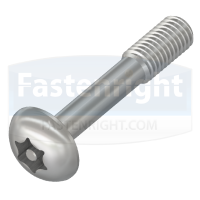
| Pin Torx | Tamper resistant with strong torque performance | Specialist tooling | Utilities and transport |
| One-Way Drive | Prevents unauthorised removal | Difficult maintenance | Security fixtures |
Security Screw Drives Explained
In many applications, security and tamper-resistance are a major consideration. Whether it’s electrical components or public installations, limiting access through the use of security screw drives improves both safety and tamper-resistance.
Here is an overview of some of the main types:
- Pin Torx – based on the standard Torx design but incorporates a central pin within the recess. This prevents a conventional Torx driver from fully engaging with the drive. Because it retains the strong torque-transfer characteristics of a standard Torx while adding a security feature, Pin Torx is widely used in industrial and commercial applications where both performance and tamper resistance are important.
- Spanner Drive – uses two small holes within the recess that engage with a dedicated two-prong driver. Its distinctive design makes it difficult to operate using standard screwdrivers or power tools. The drive is commonly specified in public-facing environments where unauthorised removal may be a concern.
- One-Way Drive – engineered to allow installation using a standard screwdriver while making removal significantly more difficult. The drive profile is designed so that the driver can apply tightening torque but cannot effectively grip when turning in the opposite direction. This makes it suitable for applications where a permanent or semi-permanent fixing is required.
Security screw drives are often required in environments where equipment must remain secure, operational and protected. Common applications include:
- Public infrastructure such as signage, street furniture and public facilities
- Utilities including electrical, gas and water installations
- Electronics enclosures that house sensitive components and equipment requiring controlled access
- Access panels on commercial and industrial equipment
- Transport systems including rail, automotive and public transport infrastructure
- Security equipment such as CCTV systems, alarm panels and monitoring devices
By reducing the risk of unauthorised access, security drives can help improve safety and protect equipment across a wide range of industrial and commercial applications.
Screw Head Sizes Explained
We have already looked at the different screw head types, and it is worth also noting that each type can come in a variety of sizes depending on its usage. The diameter of the head will have an effect on load bearing and distribution, assembly clearance, access limitations and the strength of the joint.
How to Choose the Right Screw Head and Drive
The right combination of screw head and screw drive types is an important consideration, affecting everything from aesthetics to tamper resistance, safety to strength.
Here’s our guide to choosing the right screw head and screw drive types for your needs:
- Application – Consider the intended use of the fastener. For example, countersunk heads suit flush finishes, while hex and socket cap heads are often used in engineering and industrial assemblies
- Load Requirements – The head should provide adequate load distribution, while the drive should allow sufficient torque to be applied. Torx and hex socket drives are often preferred for higher torque applications
- Material – The material being fastened can influence head style and size. Softer materials may benefit from wider heads that help spread the load and reduce surface damage
- Installation Tools – Select a drive that is compatible with the available tools and assembly processes. Drives with strong engagement can improve installation efficiency and reduce slippage
- Security Requirements – Where tampering is a concern, security drives such as Pin Torx, Spanner and One-Way designs can help restrict unauthorised access
- Appearance and Aesthetics – For visible fasteners, the head style can affect the overall appearance. Countersunk heads provide a flush finish, while button heads offer a more decorative look
Whether you are a contractor for the public sector, an engineer or a sole trader, selecting the correct screw head and drive type for your specific needs is crucial.
The friendly team at Fastenright can advise you on selecting the different screw types for your exact requirements. Contact us to discuss your project today.