


What are screws and how are they used?
Screws are threaded fasteners used to join materials together – a versatile mainstay of construction and engineering.
Used for centuries, they thread through materials to secure components together, forming a tight join between them.
Nails, on the other hand, achieve a more rudimentary outcome with a smooth, sharp point driven in by force. Meanwhile, bolts sit within pre-drilled holes and are often tightened into place with a corresponding nut.
Easy to insert and remove for construction and deconstruction, screws can be made from a variety of materials suited to woodwork, metalwork and even projects needing plastic-compatible solutions. They have a wide range of common applications across building, electronics, manufacturing, automotive and more.
Main Types of Screws
Depending on their intended use, there is a wide variety of screws available with different head types and thread designs, and in different sizes made from a range of materials.
The table below gives you an at-a-glance comparison of the main types:
| Screw Type | Main Purpose | Common Applications | Key Advantage |
| Self-Tapping Screws | Create their own thread | Metal, plastic, sheet-metal assembly | No pre-tapped hole needed |
| Thread Forming & Thread Rolling Screws | Form strong threads by displacing material | Plastics and softer metals | Strong, durable thread |
| Socket Screws | High-torque fastening | Engineering and machinery | Strong joins |
| Captive Screws | Stay attached when loosened | Electronics, access panels | Prevents loss and improves safety |
| Security Screws | Tamper-resistant fastening | Electronics, public infrastructure | Increased security |
| Electrical & Panel Screws | Precision electrical fixing | Enclosures, terminals, panels | Reliable electrical connections |
| Precision / Miniature Screws | Small-scale precision fastening | Electronics components | Suitable for confined spaces |
| Set Screws (Grub Screws) | Prevent movement between components | Mechanical assemblies | Flush finish |
| Machine Screws | Precise fastening with nuts or tapped holes | Engineering, electronics, machinery | Accurate alignment |
| Custom / Bespoke Screws | Meet specialised requirements | Niche or high-spec projects | Tailored performance |
Self-Tapping Screws
Self-tapping screws cut or form their own thread as they are driven in, removing the need for a pre-tapped hole. They are commonly used with metal, plastic and thin materials where speed and consistency matter. This makes them widely used in industrial assembly, manufacturing and sheet-metal applications.
Thread Forming & Thread Rolling Screws
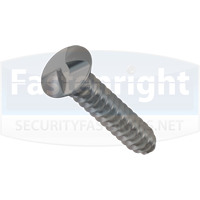
Thread forming and thread rolling screws displace material to create a strong, durable thread. They are commonly used in plastics and softer metals where clean assembly and joint strength are critical.
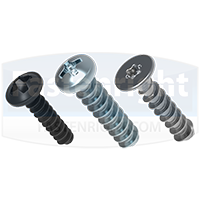
Socket Screws
Socket screws use an internal Hex drive (a small hexagon set within the screw head), which is tightened with an Allen key. This allows higher torque, making them suitable for applications where the strength of the join is vital. They are widely used in engineering and machinery.

Captive Screws
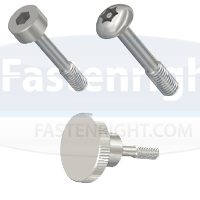
Captive screws are designed to stay attached to a panel when loosened, to prevent them from being dropped. They are often used in electronics, to secure access panels and in environments where safety is paramount. Keeping the screw in place when loosened means they cannot drop inside machinery or structures – an added benefit from a safety and compliance perspective.
Security Screws
Security screws come in a range of tamper-resistant designs. They can only be tightened or loosened with specialist tools, making them ideal for applications where safety and compliance are crucial, such as within electronic devices or public infrastructure. Examples of drive types (the shape of the recess in the screw head) include Torx, Hex, Snake Eye and Tri-wing.
Electrical & Panel Screws
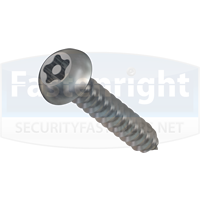
Electrical and panel screws are used in enclosures, terminals and panels where accurate and secure fixing is essential. Designed for precision and controlled tightening, they are used for reliable and safe electrical connections.
Precision / Miniature Screws
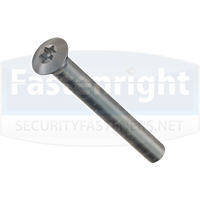
Precision or miniature screws are very small screws used in confined spaces, such as within electronics components. Manufactured to very high tolerances, they are designed for precision and reliable performance to protect delicate components and support safe, consistent assembly.
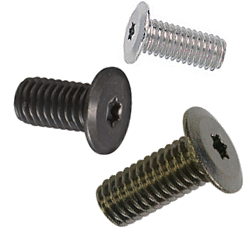
Set Screws (Grub Screws)
Set screws (or grub screws) are used to secure one component within or against another, pressing against an element to prevent it from moving or turning. They have no external head and sit flush with the surface, usually with a Hex drive for tightening and loosening.
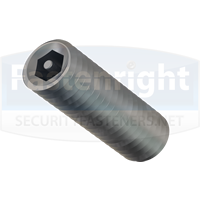
Machine Screws
Machine screws are used in conjunction with pre-tapped holes or nuts, rather than cutting their own thread. They are secure fixings that allow for precise alignment of parts, and as such are commonly used in engineering, electronics and machinery.
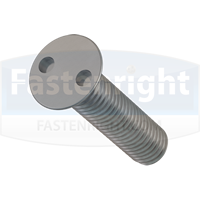
Fastenright offers a comprehensive range of machine screws for precision engineering projects. Contact us to find out more.
Custom / Bespoke Screws
Custom / bespoke screws are designed to meet non-standard technical or performance requirements and are often used for niche or high-spec applications.
When very specific criteria, such as dimensions or materials, need to be met, made-to-order screws can be designed and supplied by the experts at Fastenright.
Contact us for details about custom / bespoke screw manufacturing.
What are screw drives
We have already touched on screw drives – the shape of the recess in the screw head that the tool fits into. Here, we identify some of the main types you may come across:
- Phillips: Cross-shaped drive
- Pozi: Similar to Phillips but with extra grip for better torque control
- Torx: Star-shaped drive that allows high torque with minimal slippage
- Hex (Allen): Six-sided (hexagonal) recess used for strong, controlled tightening
- Slotted: Single slot drive, simple with limited torque and control
The drive type is an important consideration as it affects how much torque can be applied, how easily the screw can be installed or removed and the level of tamper resistance.
What are screw head types
The screw head type refers to the shape of the head and how it sits when tightened. Some head types, like countersunk, sit flush with the surface, while others protrude above it.
Common examples include:
- Countersunk: Tapered head that sits flush with the surface
- Pan: Rounded, slightly raised head that sits on top of the surface
- Button: Low-profile, rounded head with a smooth finish
- Hex: External six-sided head tightened with a spanner or socket
- Socket cap: Tall cylindrical head with an internal Hex drive
What are screw thread types
A screw thread is the spiral ridge that grips the material and holds the screw in place. There are two types:
- Coarse thread: Wider spacing between threads, easier to drive in and better grip in softer materials
- Fine thread: Closer spacing between threads, stronger hold and better control in harder materials
Threads can be metric or imperial, depending on the system used. Some screws cut threads as they go in, while others form threads by pushing material aside. Choosing the right thread depends on the material, load and application.
Read more on thread types on our blog.
Screw materials and coatings
The materials and coatings of different screw types affect their strength, corrosion resistance and use. Here is a quick look at some of the main types:
- Stainless steel: High corrosion resistance, good for outdoor or damp environments
- Carbon steel: Strong and cost-effective, usually needs a protective coating
- Brass: Corrosion-resistant and non-magnetic, often used for electrical applications
Coatings like zinc plating or galvanising help to protect them against rust and wear, making them more suitable for harsh or exposed environments.
How to choose the right type of screw?
Choosing the right type of screw, whether an off-the-shelf product or a bespoke manufactured solution, is crucial to the success of any engineering or construction project.
Before making your choice, you will need to fully consider the materials you are working with, the load the screw needs to bear, the environment the screw will be exposed to, and how the screw will be installed. Other important considerations include the level of tamper resistance and compliance from a safety perspective.
Industry specifications, for example within the automotive, electrical or construction sectors, will dictate the types of screws that can be used.
With in-depth knowledge of industry standards, safety and compliance, the team at Fastenright can help you select the right screw for the job.
Contact us to discuss your project today.